
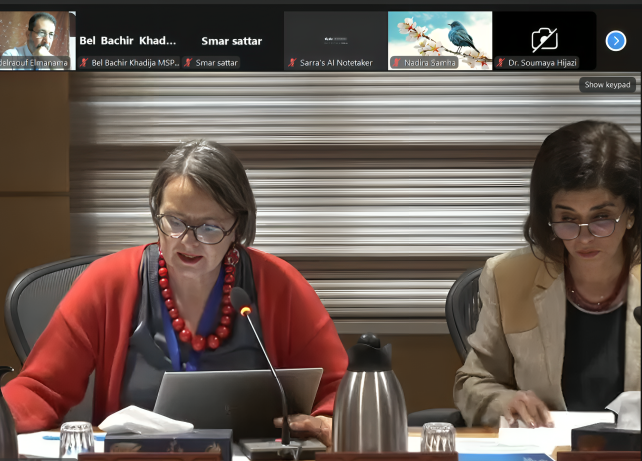
Professor Abdelraouf Elmanama, Dean of the Faculty of Health Sciences and Professor of Microbiology in the Department of Medical Laboratory Sciences at Islamic University of Gaza, took part in a World Health Organization (WHO)-led workshop addressing antimicrobial resistance (AMR) in fragile and conflict-affected settings.
During the workshop, Professor Elmanama presented a paper titled “The State of Antibiotic Resistance During the War on Gaza”, outlining how the ongoing war has severely undermined efforts to combat AMR. He highlighted the rise in preventable deaths and limb amputations resulting from the growing difficulty of treating drug-resistant bacterial infections amid widespread destruction and healthcare disruption.
The workshop aimed to present evidence and policy recommendations from the WHO’s latest regional brief, emphasising the urgent need to integrate AMR strategies into humanitarian and development responses in fragile contexts. It also provided a platform for countries to share practical experiences and approaches, while engaging stakeholders in identifying joint actions and sustainable financing mechanisms.
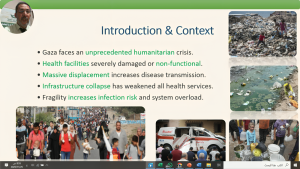
AMR disproportionately affects conflict-affected and resource-limited environments, where health systems are often weakened by displacement, limited diagnostic capacity, disrupted services, and inadequate infection prevention and control measures. In such settings, conventional AMR strategies frequently fall short due to competing priorities and structural constraints.
Participants stressed that embedding AMR interventions within the humanitarian–development–peace nexus is essential to strengthening resilience and ensuring continuity of care. The WHO Regional Office for the Eastern Mediterranean has issued practical, people-centred guidance — endorsed by the World Health Assembly — to support prevention, access to treatment, diagnostics and appropriate therapy in these challenging contexts.
