
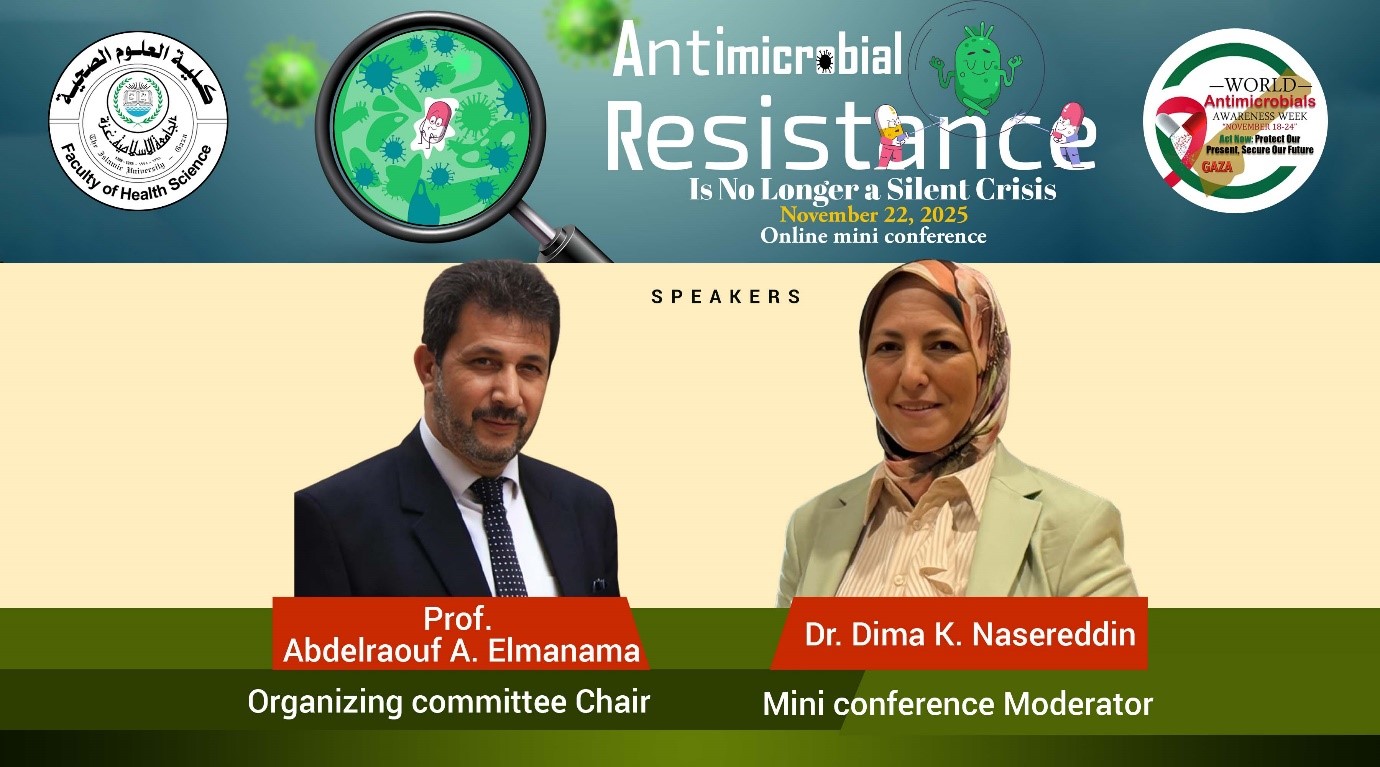
The Faculty of Health Sciences at Islamic University of Gaza hosted an international scientific conference on Antimicrobial Resistance (AMR) on 22 November 2025, amid growing concern over escalating resistance rates during the ongoing war and blockade of the Gaza Strip.
The conference brought together leading academics, researchers, physicians, and representatives of local and international health organisations to examine the scale of the crisis and explore practical responses. It opened with welcoming remarks by Dr. Dima Nassereddin of the University of Münster, Germany, followed by a keynote presentation from Professor Abdelraouf Elmanama, Dean of the Faculty of Health Sciences, who outlined the current state of antibiotic resistance in Gaza. He warned that antimicrobial resistance in the Strip “is no longer a silent crisis, but a direct threat to life”.
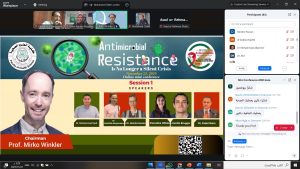
The programme featured three main scientific sessions chaired by international experts, including Dr Mirko Winkler, Helen Ottens-Patterson and Dr Nizar Badran. Discussions focused on patterns of bacterial resistance in war-related clinical infections, the challenges of treating contaminated wounds and post-conflict injuries, disruptions to antibiotic supply chains, infection prevention under severe resource constraints, and the misuse of antibiotics in both healthcare and community settings.
Representatives from organisations including the World Health Organization and Médecins Sans Frontières, alongside local hospitals and universities, presented field data and recent studies highlighting the humanitarian and public health implications of the spread of resistant bacteria.
The conference concluded with a roundtable discussion titled “What Can We Do for Gaza in the Face of Antimicrobial Resistance?” Participants issued a series of recommendations calling for strengthened international support, enhanced infection prevention and control measures, improved antibiotic stewardship programmes, and the rebuilding of diagnostic laboratory capacity in Gaza.
The event forms part of the Faculty’s broader efforts to advance scientific research, support healthcare professionals, and foster academic and humanitarian cooperation in addressing one of the most pressing health challenges currently facing the Gaza Strip.
