

The Field Training Department in the Faculty of Education at the Islamic University of Gaza, in collaboration with the Business and Technology Incubator, recently organized a one-day seminar titled “Freelancing Online in Practical Education Programs and Development Perspectives.” The seminar, attended by esteemed guests and a diverse audience of academics and students, aimed to explore the opportunities and challenges associated with freelancing in the digital age.
The seminar’s organization reflects the university’s commitment to adapting to the modern era of digital communication and embracing the potential of online freelancing. By providing students and graduates with new avenues for employment beyond traditional educational frameworks, this initiative aims to empower individuals and equip them with the necessary skills for success in an ever-evolving job market.
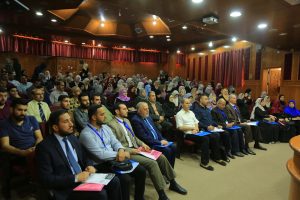
Opening session
The opening session of the seminar featured distinguished speakers who shed light on the significance of freelancing both for individuals and the community as a whole. Professor Dr. Elyan Al-Holi, Vice President for Academic Affairs, emphasized the value of freelancing in enabling self-realization, flexible time management, experiential learning, networking, and augmenting income in the face of prevalent unemployment. Moreover, he highlighted how freelancing fosters self-sufficiency within communities, allowing residents to overcome resource scarcity and fostering collaboration among its members.
Professor Dr. Ibrahim Al-Astal, Dean of the Faculty of Education, addressed the vital importance of the seminar’s theme in his opening remarks. He underscored the faculty’s ongoing efforts to enhance educational programs and align them with the practical needs of the field. Recognizing the imperative for graduates to be equipped with the skills to navigate technological advancements and work requirements in various contexts, he emphasized the Faculty’s commitment to preparing teachers who surpass the boundaries of traditional frameworks.
Professor Dr. Magdi Aql, Head of the Field Training Department, delved into the subject of the seminar, highlighting its connection to the world of artificial intelligence. He emphasized the responsibility of educators to bridge the gap between education and the modern technological revolution. Dr. Aql stressed that traditional job opportunities within the education sector may no longer suffice to meet the aspirations of graduates. Consequently, the Faculty of Education’s administration actively sought alternative approaches to working in the educational field, aiming to provide innovative and effective educational services.
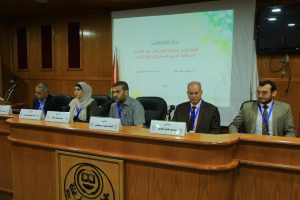
Seminar sessions
The seminar comprised two scientific sessions, during which 11 researchers, both male and female, presented nine research papers. The sessions also featured success stories relating to freelancing in the online educational domain.
Under the chairmanship of Dr. Adham Al-Balouji, the first session delved into topics such as “Mechanisms for Enhancing the Use of Freelancing Online among Field Training Students at the Faculty of Education,” presented by Dr. Hassan Al-Mashhrawi and Professor Dr. Magdi Aql. Dr. Samah Al-Jabbour explored the ethical and legal dimensions of freelancing online, while Dr. Akram Ferwana put forward a proposal titled “Investing in the Freelance Labor Market: Creating Freelancing Opportunities for Graduates of Palestinian Universities’ Faculty of Education.”
Engineer Basil Qandeel chaired the second scientific session, where Ms. Mona Abu Al-Reesh and Ms. Maram Al-Dabba presented their research paper on the “Challenges of Freelancing Online Faced by Practical Education Students at the Islamic University in Gaza.” Mr. Hazem Abu Hashem highlighted “The Role of Freelancing Platforms in Achieving Self-Realization for Palestinian Youth in the Gaza Strip,” and Ms. Alaa Shneiwarah shared insights into “Experiences of Freelancing Online in the Field of Practical Education.”
The seminar on online freelancing in practical education at the Islamic University of Gaza served as a platform for insightful discussions and valuable research, highlighting the importance of adapting to the digital era and equipping students with the skills needed to succeed in the evolving job market. By embracing online freelancing, individuals can unlock new opportunities for personal growth and professional development in the field of education.
