

The English Language Department in the Faculty of Arts at the Islamic University of Gaza organized a seminar entitled “Language and the Job Market in the 21st Century.” The seminar took place in the public conference with the participation of Dr. Osama Hammad, Dean of the Faculty of Arts; Dr. Mahmoud Baroud, Head of the English Language Department; Dr. Mahmoud Al-Tarabin, Professor of Translation and Linguistics; and Dr. Hassan Al-Nabih, Head of the Seminar, along with a group of specialists, interested parties, and members of the faculty and students of the English Language Department.
This event comes as part of the efforts made by the Islamic University and the English Language Department to support cultural awareness for their students and to enhance the idea of research, exploration, and language learning for their importance in the job market and their role in facilitating access to jobs in the face of fierce competition in our present world.
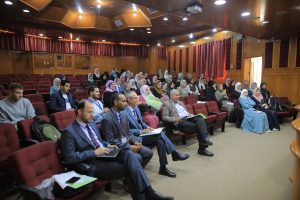
Opening session
During the opening session of the seminar, Dr. Hammad emphasized the necessity of learning languages to communicate with them as the most prominent means in this era to recognize, explore, and exchange cultures with other peoples of the world. Dr. Baroud stressed the importance of these scientific activities for students who are about to graduate as they expand their horizons and perceptions about the nature of the job market and its modern requirements.
Dr. Al-Nabih explained that the main goal of the English Language Department from these meetings is to illustrate the important rules for students in the process of proper translation and how to use it in freelance work, as well as how to employ modern technology and the internet to open up new job opportunities for students and graduates.
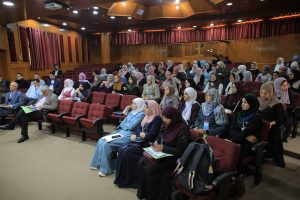
Seminar sessions
The seminar included two scientific sessions. The first session was chaired by Dr. Mahmoud Baroud, during which Mr. Mahmoud Asraf presented a scientific paper on new trends in audiovisual translation studies. Ms. Zeina Helles also presented a research paper on the translation of figurative expressions in President Mahmoud Abbas’s speech at the United Nations General Assembly. Additionally, Ms. Reem Handouka presented an analytical study on the translation of emotional metaphors in the animated movie series “Coco.” Meanwhile, Ms. Arwa Al-Harbawi presented a scientific paper on Netflix’s translation of colloquial Arabic expressions into English in the movie “The Wanted 18.” Dr. Refat Alareer also presented a research paper on the use of metaphor in translation. Ms. Islam Al-Mabhoh presented her scientific paper on rearranging the participants in the English translation of the Israeli TV show “Fauda” on Netflix. Furthermore, Ms. Amna Shabana presented a research paper on the translation of metaphors that describe the Holy Quran in the Quran itself, while Dr. Shehada Abu Weissagh presented a scientific paper on communication barriers between cultures in transferring expressions and Quranic sayings from Arabic to English. The last research paper was presented by Mr. Ahed Khashan on the translation strategies used on screen in American comedy series for Arab viewers.
Regarding the second scientific session, it was chaired by Dr. Refat Alareer, in which Professor Walid Amer presented a scientific paper on the grammatical and semantic meanings of constructions in English and Arabic. Dr. Hassan Al-Nabih presented a research paper on teaching English phrasal verbs. Dr. Abeer Abu Lobada presented a scientific paper discussing cross-cultural awareness in teaching English as a foreign language. Dr. Asmaa Abu Samra presented a scientific paper on the English language, online graduates, employment reality, and challenges in the global job market. Dr. Eman Baalousha presented a research paper on the impact of a digital English phonetics course on the literacy skills of fifth-grade students. Ms. Amal Al-Farra presented a scientific paper on visually impaired Palestinian students in the special and inclusive secondary stage and their learning of English as a foreign language. Finally, Ms. Heba Hamouda presented her research paper on the digital story as an educational tool to enhance the accurate reading skills of Palestinian refugee children in English.
