

Faculty of Medicine in cooperation with Faculty of Sharia and Law at IUG organized a symposium titled ” Physicians Ethics and Organ Transplantation in the Gaza Strip from Medical and Legal Prospective: Realty and Expectancy“.
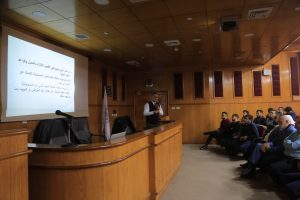
First Session:
The session started with Dr. Fadel Naem, Dean of Faculty of Medicine, who stated that ” The nature of the relationship between a physician and a patient is based on two-party contracting that comply the physician with medical invariants“. He considered medical practice professionalism as the fundamental center of this relationship, where the patient pays a pre-determined wage to the physician.
He added that, the current global development and the plethora of hospitals and medical institutions that have never been existed before have made conflict of interests between the physician and the patient by the existence of several governmental and civic organizations that represent the patient and defend their rights. The relationship has never been as solo as before.
Dr. Naem clarified that the social contract between the physician and the patient is a mixture of what is implied, what is explicit, what is written, and what is not written. Through that, the two parties comply with the obligatory compliances that include therapy, ethical commitment, transparency, trust, self-organization, respect, and appreciation.
He pointed out that organizing medicine profession is the physician’s own responsibility, and the patient is the one who determines the proper therapy method.
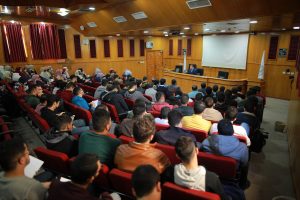
Dr. Afif Abu Kaloub, Head of Sharia an Law department, highlighted that the difference between ethical rule and legal rule from the end purpose point of view is represented by the utilitarianism for each of them. The ethical rule is broader than the legal one and organizes the relationship between humans, their own selves, and their creator.
He added that, the violation in these two rules poses a material or moral penalty, and the law imposes upon the physician to exert the utmost care in treating the patient, and to comply with ethics and morals of this profession including not to take advantage of the patient and refuse all types of discrimination between patients. He pointed out that if the physician undergoes such prohibited route, they must take punishment matching the nature of the prohibition they committed.
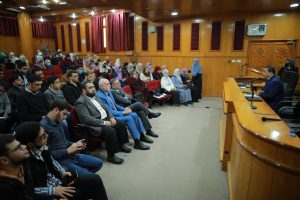
Dr. Sadeq Qandeel, faculty member of Sharia and Law, said that “the medical ethics is the general moral rules of Islam, which cannot be detached from the Sharia, and the fundamental moral rules of Islam relevant to medical practicing are exactly the same five rules of Sharia that include the protection of religion, oneself, ancestry, mind, and money.”
He demonstrated that the ethical responsibility in Sharia is a self-responsibility before Allah, which considers the necessities and the nonessentials of humans and requires internal stamina within the soul. That is all what the physician needs to reach the highest connection with the patient who can be subjected to negative thought.
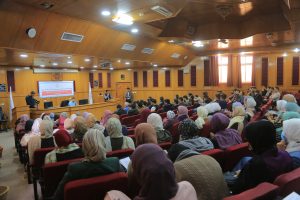
Second Session:
In the second session, plenty of scientific papers were discussed including: organ transfer and transplantation from medical, ethical, and legal prospective.
