
Gaza has been the icon of struggle since ages, yet today has dramatically grown to be on the focus of the world’s attention more closely after the Great Return March set off six months ago.
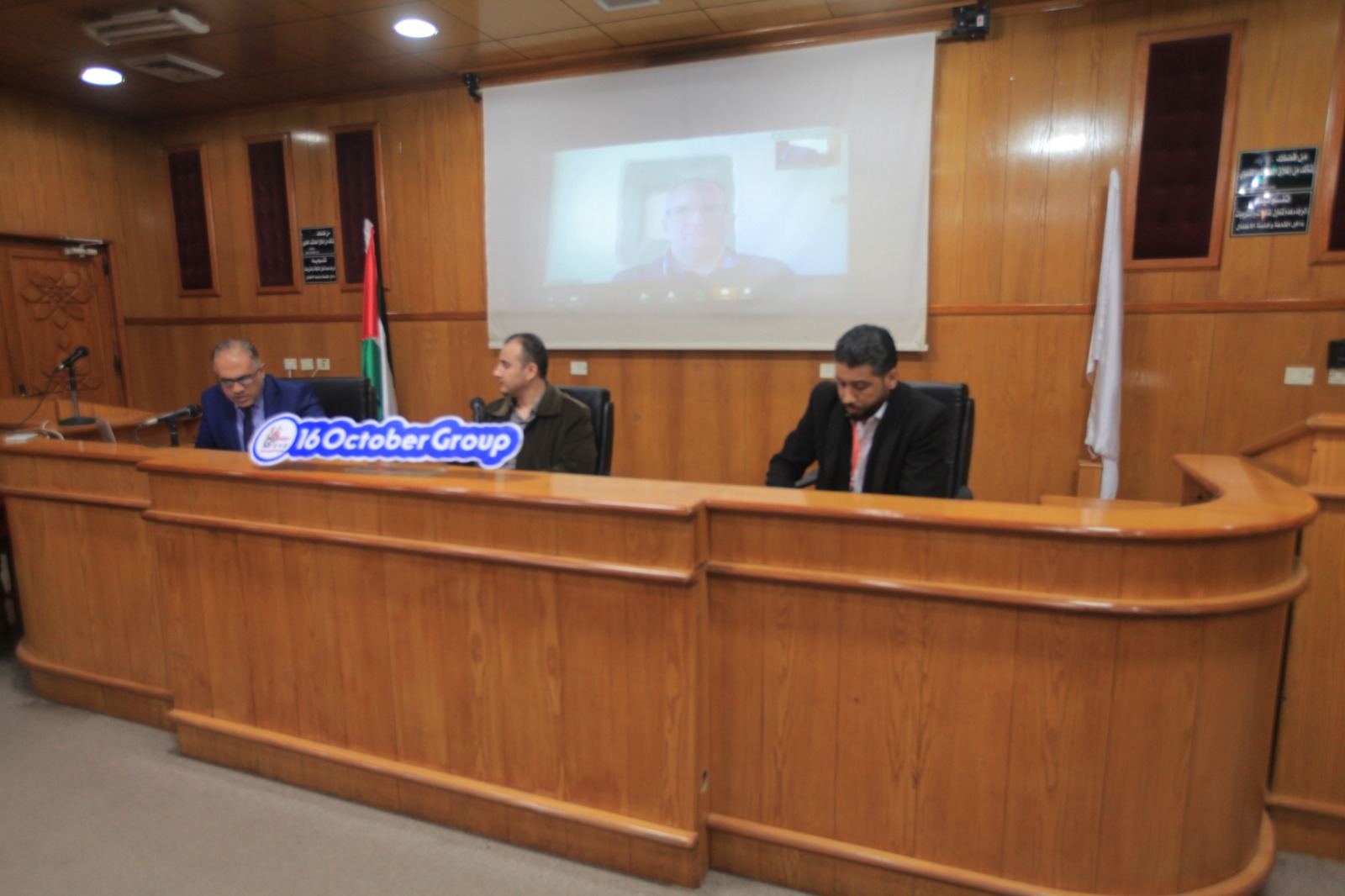
In this regard, the IUG Faculty of Arts, Journalism Department, teamed up with the Foreign Media Unit at Al-
Explaining the title of the meeting, Mr. Thompson, the co-founder of Scoop, reflects on two important things: Understanding Gaza through Context and the role of Media in understanding Gaza locally and internationally.
There is a great shift more than ever before in reporting Gaza and covering the Palestinian issue at the international media level. Many International reports like the CNN mentioned that the events of the Great Return March have become the context that the world could understand Gaza through. Since the GRM began, the position of Gaza has changed and the stories of killing documented by videos, pictures, and Palestinian Health Ministry reports have led to a clear shift and higher progress in understanding the nature of Israeli- Palestinian struggle around the globe. If there
On the other scale, Mr. Thompson put the international media on focus and stood on the tactics journalists used in reporting Palestine “in the age of stupid”, as he called it. More illustration, there’s been a cancerous plight in the media practices in the USA and Europe since Trump jumped into power; a bad propaganda and fake narratives always support the Israeli side. Despite we live in the age of stupid, the real image of the struggle between Israelis and Palestinians is convincing and the GRM effects are wide spreading even in the USA. Due to this, many officials in the USA have advocated the Palestinian issue, Germy Carbon is one of them, and he has been accused of anti-Semitism, as a result.
At the closing moments of the meeting, MR. Thompson recommended the Palestinian media activists to:
1- Keep telling their stories effectively.
2- Increase the joint media work.
3- Separate the governmental media work from the public media work.
4- Change the traditional narration of Gaza.
5- Add the humanitarian nature on the stories rather than the military ones.
